The cloud of tomorrow may not just be the one that computes the fastest or consumes the least energy, but also the one that knows how to choose the best time and place to perform its computations.
With the growth of renewable energy, data centers will need to adapt their operations to increasingly variable electricity generation. To do so, improved storage, intelligent server management, and the offloading of certain computations are all solutions that help balance service continuity with the energy transition.
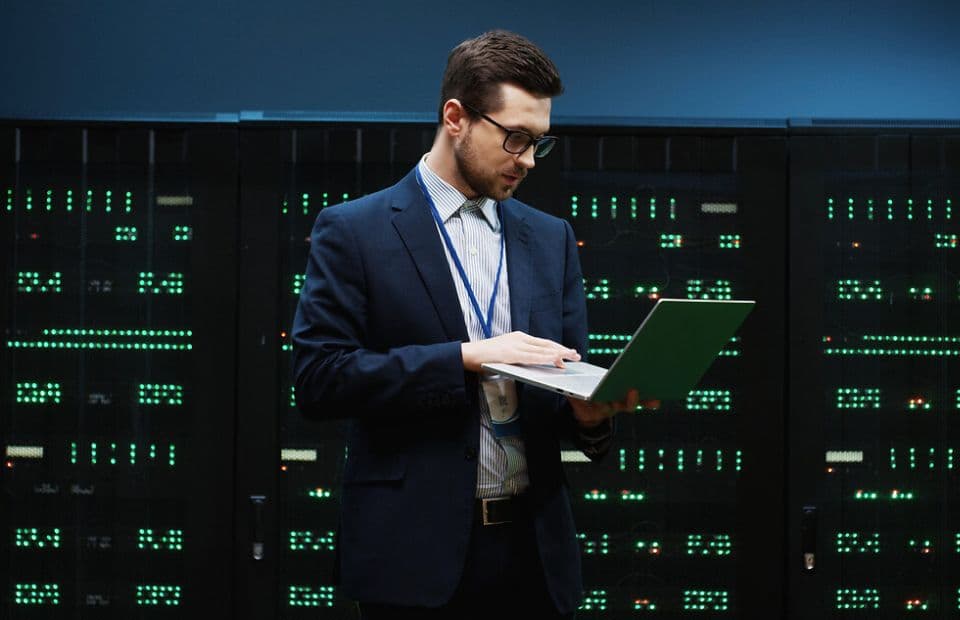
Whether their servers host business applications, perform artificial intelligence calculations, or provide streaming services, data centers must meet user demand 24 hours a day. This requirement for availability relies on a power supply that is sufficiently stable, powerful, and secure.
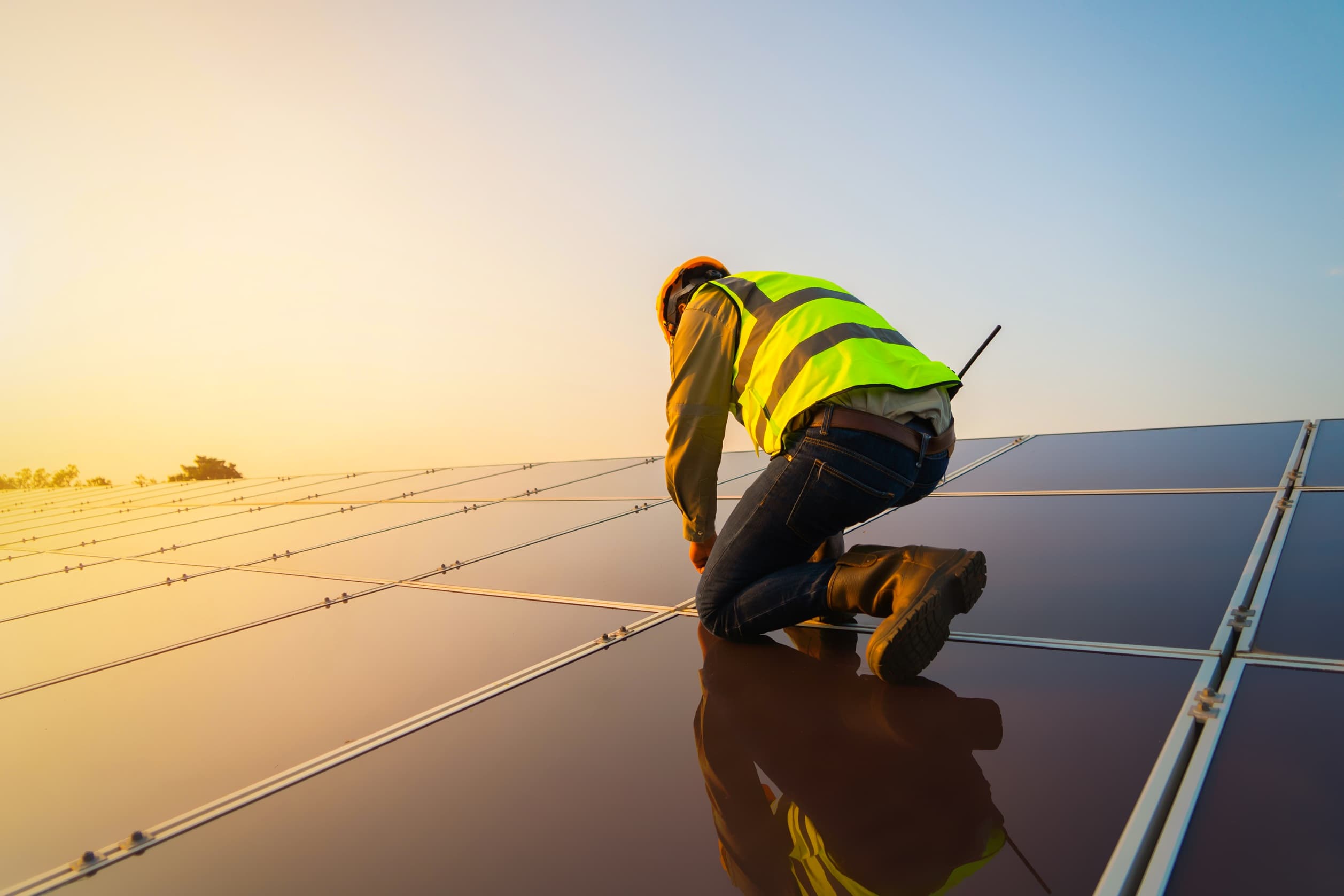
As the use of solar and wind energy grows, an increasing share of electricity comes from sources whose output depends on weather conditions. Photovoltaic panels generate electricity based on sunlight, while the power output from wind turbines fluctuates with the wind. This variability presents a new challenge for digital infrastructure, whose energy needs do not necessarily align with periods of renewable energy production.
So, how can we ensure the continuity of IT services in the face of an unstable power supply? According to Stéphane Caux, a professor at Toulouse INP and researcher at the Laplace Laboratory (Plasma and Energy Conversion Laboratory), who specializes in energy management and conversion, the answer lies in a flexible approach—one that has been explored, in particular, as part of the DATAZERO research project, dedicated to data centers powered by renewable energy—with the goal of creating a cloud whose energy consumption could adjust, within certain limits, to the availability of electricity.
It’s a matter of finding the best balance between power consumption, execution times, and user requirements
Stéphane Caux
Professor at Toulouse INP and researcher at the Laplace Laboratory
Energy Storage: The First Lever to Activate
The primary solution to the intermittency of renewable energy is to store electricity when it is abundant and release it when production declines. To this end, data centers already have batteries designed to ensure business continuity in the event of a power outage. However, an infrastructure that relies largely—or even exclusively—on renewable energy must also compensate for daily fluctuations in production. Stéphane Caux explains: “The sizing of the storage system will depend on weather conditions, server power consumption, the consumption profile, and the potential contribution of other energy sources.”
The challenge is as much economic as it is technical, because increasing storage capacity improves autonomy but requires additional investment. Conversely, insufficient capacity can jeopardize service availability.
Adapting computations to available electricity
The second solution involves managing server consumption, as not all computing tasks have the same level of urgency. Some applications require an immediate response, while others have some flexibility in their execution time. This is the case for certain scientific calculations, data processing tasks, or training artificial intelligence models, which can, under certain conditions, be scheduled for more favorable times.
This operational flexibility makes it possible to temporarily reduce the power allocated to servers. The challenge, however, lies in precisely determining acceptable margins of flexibility. “It’s not a matter of sacrificing service quality for the sake of electricity availability, but rather of finding the best balance between power consumption, execution times, and user requirements,” explains Stéphane Caux.
Artificial Intelligence for a Flexible Cloud
Another lever to leverage is artificial intelligence, which can coordinate renewable energy production and server consumption by anticipating weather variations, battery status, equipment performance, and changes in IT demand.
This technology can improve electricity production forecasts based on weather data and historical facility data. If a drop in sunlight is forecast, certain computations can be brought forward, and a portion of the reserves can be preserved. It can also model server consumption based on their workload and specifications to estimate the energy cost of a task across different pieces of equipment. Finally, it can anticipate IT demand by analyzing daily fluctuations or spikes linked to specific events.
By combining this information, operators can better allocate energy and computing resources. Since these forecasts are not perfect, however, the system must maintain safety margins and be able to respond in real time to unforeseen events.
Rethinking the Electrical Architecture of Data Centers
Beyond data storage and computational management, the energy transition is driving the evolution of the electrical architecture of digital infrastructures.
Conventional data centers rely heavily on alternating current (AC) distribution, which requires several stages of transformation and conversion before electricity can power the electronic components of servers. However, photovoltaic systems and batteries operate on direct current (DC). Wind turbines can also be integrated into this type of architecture using power electronics devices.
The research in which Stéphane Caux participated thus explored the benefits of direct current (DC) power distribution within data centers. The goal would be to simplify certain conversion steps, reduce the amount of equipment required, and limit associated energy losses.
This approach could also lead to a reevaluation of the redundancy architectures used to ensure operational reliability. In particular, the researcher highlights the possibility of finding a balance between the level of equipment redundancy, storage capacity, and the diversity of energy sources.
Decarbonizing the cloud could thus involve not only transforming its energy supply but also overhauling the way electricity is distributed to servers.
Energy flexibility: a new performance metric for the cloud?
These various trajectories outline a possible evolution of performance metrics for digital infrastructure. Today, data centers are primarily evaluated based on their computing power, availability, energy efficiency, and ability to respond quickly to user needs.
In the future, their ability to adapt their energy consumption to the availability of electricity could become an additional metric.
For operators, this would involve integrating energy forecasts into infrastructure management tools and developing scheduling mechanisms capable of accounting for electrical constraints.
For cloud service providers, new offerings could emerge, allowing customers to choose between immediate execution or deferred processing—which could be less expensive or associated with lower-carbon electricity.
It remains to be seen to what extent the cloud can be made flexible without compromising the quality of service that defines its value.
The cloud of the future may not only be the one that computes the fastest or consumes the least energy, but also the one that knows how to choose the best time and place to perform its computations.
Glossary
Intermittency
Variation in electricity generation from an energy source based on its availability, particularly due to weather conditions.
Task scheduling
The organization of computer processing based on available resources and time constraints.
Direct current
Non-sinusoidal electric current, used in particular by batteries and electronic components.
Energy flexibility
The ability to adjust electricity consumption over time or in terms of power output to adapt to conditions in the power grid.
We quote them
Stéphane Caux
University professor at Toulouse INP and researcher at the Laplace Laboratory (Plasma and Energy Conversion Laboratory). His work focuses in particular on energy management, robust control, and real-time optimization. He is particularly interested in electrical systems that incorporate renewable energy sources. He has participated in the DATAZERO and DATAZERO2 research projects dedicated to the power supply and control of data centers using renewable energy. His research, conducted in collaboration with researchers from IRIT (Toulouse Institute for Research in Computer Science), explores the coordination between electrical constraints, energy storage, and the scheduling of computing tasks.
FAQ
Solar and wind power generate electricity at varying rates, depending on the weather. However, data centers must operate continuously. They must therefore be able to compensate for periods of low generation while maintaining the availability of their services.
Several approaches are possible: increasing storage capacity, better forecasting renewable generation, adjusting server power, or deferring certain computing tasks when their execution is not urgent.
AI can help forecast solar or wind power generation, anticipate computing demand, and estimate server energy consumption. This information can then help determine when to run certain tasks and how to best utilize available energy reserves.
Yes. Some services already make it possible to distinguish between processes that must be executed immediately and those that can be deferred. This flexibility would allow computations to be better aligned with periods when renewable electricity is most available.