
Player provided by Orange Mastermedia. Starting it sends browsing data to that service.
What is the Quantum Internet? Eleni Diamanti (CNRS) explains…
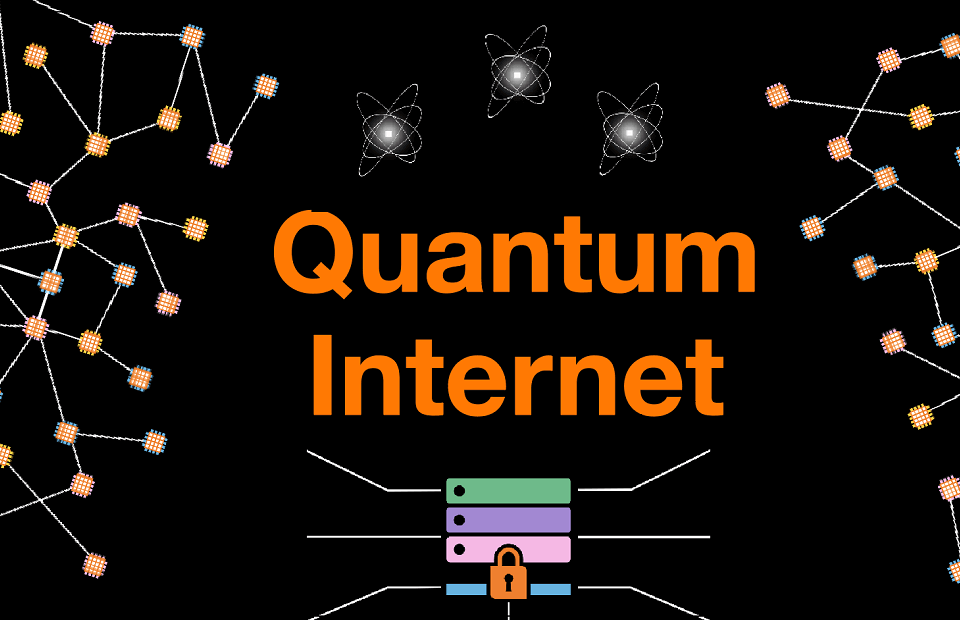
The quantum Internet represents a network offering supplementary services beyond conventional technologies. To establish a quantum Internet, the initial requisite involves creating communication links allowing the transmission of light. Information manipulation and communication in the quantum realm are encoded within photon properties, necessitating communication lines permitting light transmission—usually achieved through optical fiber or satellite-based channels.
Primary applications span cryptography, security, and cybersecurity, showcasing quantum signals' ability to securely transmit messages remotely.
Contrary to regular internet practices, quantum computing prohibits signal amplification, demanding quantum repeaters to regenerate strong signals through light-matter interfacing. Primary applications span cryptography, security, and cybersecurity, showcasing quantum signals’ ability to securely transmit messages remotely. Beyond cybersecurity, interconnecting devices like quantum processors and sensors promises a substantial surge in computing power. The quantum Internet’s essence lies in providing access to distributed quantum services, heralding a realm of sophisticated technologies and services.
People we quote
Eleni Diamanti
Eleni Diamanti is a Research Director at CNRS and serves as the Coordinator of the Paris Centre for Quantum Computing.
Read more