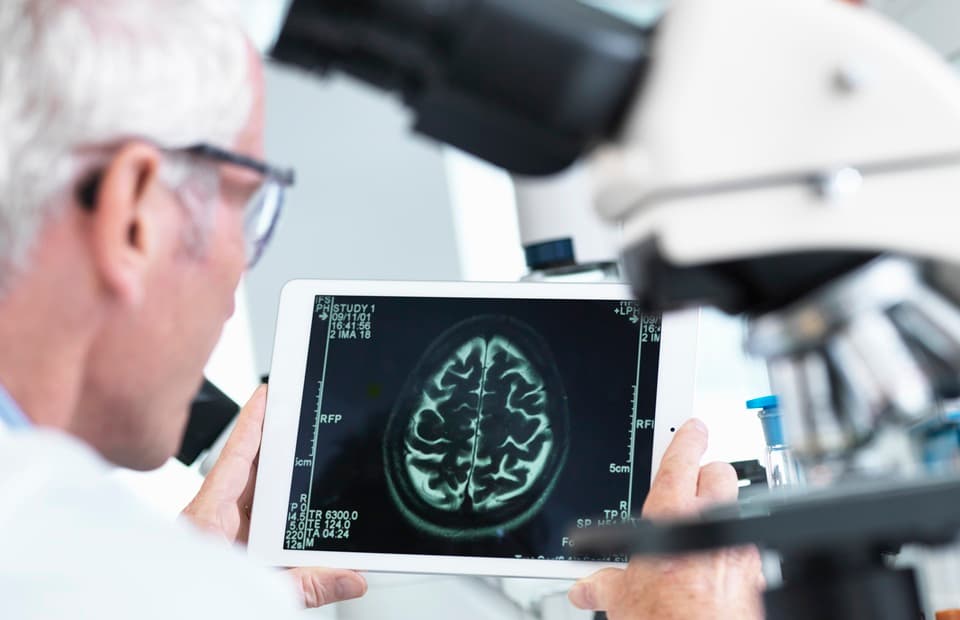
Introduction
In 2008, Gloria Mark and her colleagues experimentally measured what many people experience without being able to name it: after an interruption during a work task, it takes an individual an average of 23 minutes to regain a level of concentration equivalent to that before the interruption (Mark, Gudith & Klocke, 2008) (1). In a professional environment where interruptions occur every three to five minutes, this finding is no longer anecdotal. It describes a near-permanent state of attentional fragmentation, in which deep concentration becomes structurally unattainable.
This phenomenon has a name: Technostress. Introduced by psychologist Craig Brod in 1984, the term originally referred to an individual’s difficulty adapting to computer technologies (Brod, 1984) (2). Four decades later, the concept has changed in nature. It no longer describes a subjective discomfort with technology. Rather, it refers to a structural imbalance between finite, biologically constrained human cognitive capacity, rooted in the body and informational environments designed for uninterrupted stimulation.
This article examines this imbalance from four interconnected perspectives:
- The cognitive foundations that make overload inevitable beyond a certain threshold, including the embodied dimension of cognition.
- Emerging technologies for detecting cognitive states, distinguishing established evidence from exploratory approaches.
- The reshaping of the human-machine loop was brought about by autonomous agents and collaborative robotics.
- Finally, the issue of cognitive sovereignty in all its industrial, operational, legal, and democratic dimensions, examining the links between neuro-rights and emerging regulatory frameworks, including the European AI Act.
Digital pressure is not merely a matter of individual comfort or organizational ergonomics, but also a symptom of a world in which human cognition is becoming a technical object, one that is measurable, modellable, and governable from the outside.
Part 1– A Bayesian Brain in a World Saturated with Signals
The dominant view in contemporary cognitive neuroscience is that of the Bayesian brain: the brain does not passively receive reality; it infers it. It constantly combines internal expectations built through experience with external sensory signals to produce the most likely representation of what is happening. This predictive coding-theory, formalized by Karl Friston (2010) (3), rests on a simple principle: perceiving, deciding, and acting mean reduce uncertainty, rather than merely record facts.
This architecture has a direct implication for technostress. If cognition is fundamentally an activity of inference under constraint, then any inflation in signals, noise, interruptions, competing demands for attention and simultaneous injunctions—degrades the quality of that inference. This is not a matter of willpower or individual discipline. It is a matter of the physics of information processing.
Shannon (1948) (4) formalized this principle in a different context: every communication channel has a maximum capacity, beyond which the error rate inevitably rises. Applied to human cognition, the principle is illuminating provided it is treated as a productive analogy rather than a formal equivalence. The brain is not an electronic channel. But, like one, it has processing limits beyond which fragmentation becomes structural.
Twentieth-century cognitive psychology provided experimental evidence for this limitation. George Miller (1956) (5) demonstrated that working memory can simultaneously maintain only a limited number of items. Donald Broadbent (1958) (6) formalized the idea of an attentional filter: when confronted with competing stimuli, the central nervous system selects; it does not process everything in parallel. Alan Baddeley and Graham Hitch (1974) (7) described working memory as a set of subsystems coordinated by a central executive with limited resources. Bernard Baars (1988) (8), followed by Stanislas Dehaene and his colleagues (2011) (9), gave this architecture its most integrative formulation through the global workspace theory: a multitude of specialized processes operate in parallel within the cognitive unconscious, but only a very limited amount of information reaches a central conscious stage, where it becomes available for reasoning, decision-making and coordinated action.
It is precisely this narrow space that contemporary digital environments saturate. The documented effects are numerous: higher error rates in judgment tasks, longer decision times, reduced depth of reflection, and a well-documented paradox, a subjective sense of control maintained by individuals who are objectively overwhelmed (Kirsh, 2000) (10).
One long-term effect is worth mentioning here. Loh and Kanai (2016) (11) demonstrated, in a literature review on the effects of intensive internet use on cognition, that chronic exposure to high-information-density environments is associated with changes in prefrontal functional connectivity and a reduced capacity for sustained attention. These results remain controversial, and causal effects are difficult to isolate from selection effects. Yet they suggest that, in addition to being an acute phenomenon, digital pressure may exert lasting effects on brain plasticity itself.
The Contribution of Embodied Intelligence: Cognition Is Not Confined to the Brain.
A major limitation of classical cognitive models is that they treat the brain as an isolated processor. Contemporary neuroscience and the philosophy of mind have profoundly challenged this view.
The field of embodied cognition, whose theoretical foundations were laid by Francisco Varela, Evan Thompson, and Eleanor Rosch (1991) (12), and later developed by Andy Clark (1997) (13) and Alva Noë (2004) (14), argues that cognition is not localized in the brain alone. It emerges from the dynamic interaction between the brain, the body, and environment. Posture, breathing, muscle tension, eye movement, heart rate: these bodily dimensions are, in fact, constitutive components of thought.
This perspective should radically change our understanding of technostress. Digital pressure is not exerted solely on an abstract brain; it is exerted on the entire organism. A rigid posture in front of a screen, shallow breathing under high cognitive load, chronic neck tension: these bodily manifestations are not secondary consequences of mental overload. They are simultaneous expressions of it, and sometimes even amplifiers.
For the detection of cognitive states, this perspective is crucial. It justifies integrating bodily signals (posture, gait, muscle tension, respiratory variability) into models for inferring cognitive load. It also suggests that interventions in the physical work environment, such as ergonomics, mobility, and active breaks, are not merely peripheral measures of comfort. They directly influence the quality of cognitive processing.
Clark and Chalmers (1998) (15) expanded on this line of thought with the concept of the “extended mind”: digital tools, interfaces, and environments are not merely supports for cognition; they are functional components of it. A well-designed dashboard reduces cognitive load by externalizing part of the processing. A poorly designed dashboard increases it by requiring additional translation and reconciliation steps. Interface design is therefore not merely an aesthetic issue; it is a cognitive issue in the fullest sense.
The strategic question that arises is this: as autonomous agents take on an increasing share of operational decisions, what level of understanding does the human operator maintain regarding the overall system?
Part 2– Measuring the Unspoken: The State of the Art in Weak Signals.
A body of recent research explores the possibility of inferring cognitive states, such as workload, fatigue, stress, and disorientation, from continuous behavioral and physiological signals, without relying on verbalization. These approaches are at very different levels of maturity, and this gradation must be made explicit.
Bio-sensing and signals with a solid experimental foundation.
Pupillometry is one of the most well-validated indicators. Beatty (1982) (16) established a correlation between pupillary dilation and mental effort in controlled tasks. This relationship has been replicated in numerous contexts, including operational environments (van der Wel & van Steenbergen, 2018) (17). The pupil dilates under high cognitive load, regardless of variations in light, provided that these variations are controlled.
Heart rate variability (HRV) is a sensitive indicator of autonomic regulation and stress. It can be measured using common wearable sensors, making it an operationally relevant proxy.
Keyboard typing dynamics (inter-key latencies, errors, rhythm) have been shown to correlate with emotional and cognitive states in several experimental studies (Epp, Lippold & Mandryk, 2011) (18). Its sensitivity is sufficient to detect variations in cognitive load during standardized office tasks.
Electrodermal activity reflects sympathetic activation and is a classic indicator of acute stress, used in psychophysiology for several decades.
Signals are currently undergoing validation.
Functional near-infrared spectroscopy (fNIRS) allows for the estimation of prefrontal activity by measuring cerebral oxygenation, without restricting mobility. Recent studies show promising sensitivity to cognitive load in complex tasks (Ayaz et al., 2012) (19). Technology is undergoing miniaturization, and several teams are working on integrating it into wearable devices. Its level of validation under real-world conditions remains lower than that of cardiovascular measurements.
Semantic and syntactic analysis of textual output is another emerging approach. Elvevåg et al. (2010) (20) demonstrated that the semantic cohesion of produced texts deteriorates under certain pathological conditions. More recent studies are exploring the extension of this approach to cognitive fatigue in non-clinical populations, with encouraging preliminary results that still need to be further validated.
The fine motor skills indicator can also provide certain clues. For example, mouse trajectories show an increasing error rate under high cognitive load (Yamauchi & Xiao, 2018) (21). This indicator is readily available in computerized work environments, but its specificity is limited: many non-cognitive factors influence fine motor skills.
Exploratory signals.
RF sensing, the detection of radio signals reflected by the body to infer physiological or emotional parameters, has been the subject of notable experimental demonstrations (Zhao et al., 2018) (22). Technology allows for contactless measurement without the need for wearable sensors, which represents a considerable operational advantage. Its validation under complex ecological conditions remains largely to be established.
Infrared thermography of the face, correlated with stress-related variations in blood flow, is used in controlled research settings. Its robustness under real-world conditions, including variations in ambient temperature, movement, and partial occlusions, has not yet been sufficiently established.
Gait analysis and bioimpedance as proxies for cognitive states are active areas of research, but their level of validation for specific cognitive inference remains preliminary.
The epistemological principle applies strongly here: these signals are contextual proxies, not transparent windows into a mental state. Their interpretation depends on the model used, the reference population, the acquisition conditions, and the task context. The value of these approaches lies in their convergence and contextual integration, not in the isolated interpretation of a single signal. Let us remember that a statistical correlation is not causation, and that a probabilistic inference is not a diagnosis.
Part 3– When Autonomous Agents and Robotics Enter the Loop
Technostress takes on a new dimension with the widespread adoption of autonomous agents, AI systems capable of acting, making decisions, and interacting without continuous human intervention, and collaborative robotics. This development fundamentally reshapes the human-machine cognitive loop.
In traditional models of human-machine interaction, humans make decisions and machines execute them. In contemporary multi-agent architecture, this central role is redistributed. Autonomous agents make decisions, generate alerts, propose actions, and even act directly within defined parameters. Humans shift from the role of operator to supervisor, which does not reduce the cognitive load but profoundly transform it.
Parasuraman and Riley (1997) (23) formalized this problem under the term “complacency automation”: when automated systems are reliable most of the time, human operators tend to reduce their active vigilance, which weakens their ability to detect rare but critical failures. This phenomenon is well documented in aviation (Skitka, Mosier & Burdick, 1999) (24) and is beginning to be studied in AI-supervised cybersecurity environments.
Collaborative robotics (cobotics) introduces an additional dimension that classical cognitive models do not capture. When a robot physically shares a human operator’s workspace, the cognitive load is no longer limited to information processing. It includes managing physical proximity, predicting the robot’s movements, and real-time motor coordination. Recent research shows that physical co-presence can increase the overall cognitive load, even when the robot reduces the load of the primary task (Charalambous et al., 2016) (25). This is where embodied intelligence becomes particularly relevant: the operator’s cognition in a cobot environment is a physically engaged form of cognition, not merely a response to informational demands.
The strategic question that arises is this: as autonomous agents take on an increasing share of operational decisions, what level of understanding does the human operator maintain regarding the overall system? The loss of situational awareness in highly automated systems is a well-documented risk (Endsley, 1995) (26). It constitutes a new form of technostress: no longer overload due to an excess of signals, but disorientation caused by the system’s opacity.
It is in this context that the concept of the human cognitive digital twin becomes meaningful. This is not a copy of the human mind, nor a device for monitoring operators. It is a system for contextually modeling cognitive state of a real individual, capable of aggregating weak signals to assess a state of overload, desynchronization, or loss of vigilance, and of adjusting the level of assistance or automation accordingly. This approach can lead to strategies for graceful degradation: enhanced informational assistance in the first stage, shared control in the second, and autonomous safety measures when the risk of cognitive failure becomes critical. This approach reverses the punitive logic often associated with operator monitoring: the aim is not to measure people to sanction or replace them, but to design systems that recognize their inherent limits, so those limits do not turn into errors or accidents.
A concrete example illustrates the strategic challenge. In cybersecurity monitoring centers, AI systems now generate several hundred alerts per day (Verizon, 2026) (27). An external actor who controls both the alert-generation system and the system that infers analysts’ cognitive states could anticipate their decision-making vulnerabilities. In theory, this actor could manipulate the flow of alerts to deliberately overwhelm the analysts’ attention capacity just as a real attack is launched. This capability, if it is opaque or unregulated, constitutes a new type of strategic dependency, no longer on data or infrastructure, but on the conditions under which human judgment is exercised.
Part 4– Neuro-rights, the AI Act, and Cognitive Sovereignty: A Normative Framework in the Making
Neuro-rights: Four Founding Principles.
As technologies make it possible to infer internal states from behavioral and biological data, a question arises with increasing urgency: Who controls these inferences, within what framework, and with what safeguards for the individuals concerned?
Neuro-rights, the framework for which was proposed by Rafael Yuste and Sara Goering (2017) (28) in Nature, constitutes the first structured normative response to these challenges. They establish four principles. Cognitive freedom guarantees that no one may be constrained in their mental processes by external technology. Mental privacy protects brain and cognitive data from any non-consensual collection or exploitation. Mental integrity prohibits any unauthorized alteration of cognitive processes by technical devices. Psychological continuity protects a person’s identity and coherence from changes induced by augmentation or modulation technologies.
These principles have not remained mere academic declarations. Chile incorporated neuro-rights into its Constitution in 2021, becoming the first country in the world to grant them constitutional status. Other countries, including Spain and several U.S. states, have initiated legislative processes in this direction. This international regulatory momentum is accelerating.
The European AI Act: Partial but Decisive Framework.
The European AI Act, adopted in 2024, constitutes world’s first binding regulatory framework for artificial intelligence systems. Its relationship to issues of cognitive sovereignty warrants careful analysis, as it is both promising and incomplete.
“The AI Act classifies AI systems according to their risk level.” (“High-Risk AI Systems According to the AI Act – LeBigData.fr”) AI systems designed to assess or predict emotional or cognitive states in professional contexts are classified as high-risk (Annex III), which subjects them to strict requirements: prior conformity assessment, technical documentation, transparency toward users, mandatory human oversight, and registration in a European database. AI systems capable of subliminally manipulating behavior or exploiting cognitive vulnerabilities are prohibited (Article 5) (29).
These provisions represent a real step forward. They implicitly recognize that human cognition is a specific object of protection in digital environments. However, the AI Act has significant limitations regarding issues of cognitive sovereignty. It does not explicitly treat neural or cognitive data as a category distinct from traditional biometric data. It does not provide for a specific regime for human cognitive digital twins. And it does not cover military or national defense uses, which are precisely the environments where issues of cognitive sovereignty are most acute.
The relationship between the AI Act and neuro-rights therefore remains to be established. At a minimum, it requires that the obligations regarding transparency and human oversight set forth in the AI Act be interpreted considering the principles of cognitive freedom and mental integrity. It also requires that national oversight authorities develop specific expertise in cognitive inference systems, distinct from their general expertise in high-risk AI systems.
Technical protection architectures.
Protection cannot rely on commitments of principle alone. It must be embedded in the very design of the systems. Several technical approaches make it possible to translate normative principles into architectural constraints.
Edge computing limits the transmission of raw cognitive data to remote servers, thereby reducing the surface of the attack. Federated learning enables the training of inference models without centralizing individual data. Zero-knowledge proofs demonstrate that a cognitive state satisfies a given criterion, for example, a sufficient level of vigilance, without revealing the underlying data. Trusted execution environments ensure that cognitive data is processed in an isolated and certified environment. Semantic segregation between the private, medical, and professional spheres prevents the reuse of cognitive data collected in one context for purposes related to another context.
Within a framework of cognitive sovereignty, these mechanisms are not merely technical options among others; they are design requirements.
What Science Establishes and What It Leaves Open
Research has firmly established that human attentional and memory capacity is limited, that digital environments with high information density exert measurable pressure on these capacities, and that behavioral and physiological signals allow for the estimation of certain cognitive states with increasing precision. It also establishes that cognition is embodied, rooted in a body and an environment, and that autonomous agents introduce new forms of cognitive load related to supervision and the loss of situational awareness.
What science leaves open is equally important. Models of cognitive inference remain dependent on reference populations that are often narrow and lack diversity. Inter-individual generalization is limited by biological and contextual variability. The long-term effects of chronic exposure to digital stress on brain plasticity have been documented but are still debated in terms of their causality (Loh & Kanai, 2016) (11). The interactions between autonomous agents and human cognitive load are an emerging field of research, with empirical findings that remain fragmentary. And the governance of cognitive data, who can access it, for what purpose, and with what recourse for challenge, remains largely unresolved from a legal and ethical standpoint, including within the framework of the AI Act.
These uncertainties are not reasons to wait but motivations to design systems that take them into account from the very outset of their architecture.
Conclusion – A Global Challenge, Differentiated Responsibilities
When digital environments exceed the limits of human cognition, failure is no longer an accident. It becomes predictable and measurable.
The issue of technostress and cognitive sovereignty is not a niche technical issue. It entails profound transformations at every level of social organization, from the individual to the state.
On a global scale, competition between models for governing human cognition within technical systems is already underway. Some actors are developing large-scale cognitive inference capabilities without significant regulatory constraints. Others, including Europe, are attempting to build a regulatory framework that balances performance and protection. The outcome of this competition will determine whether the measurement of human cognitive states becomes a tool of asymmetric power capable of anticipating the decision-making vulnerabilities of adversaries or partners, or a shared framework governed by common principles. If neuro-rights achieve international recognition comparable to that of digital rights, they could form the foundation of this shared framework. Their incorporation into multilateral instruments within UNESCO, the Council of Europe, or the United Nations is a realistic prospect within the next decade.
At the national level, cognitive sovereignty requires a rethinking of national security doctrines. In critical sectors such as defense, intelligence, critical infrastructure, and public health, the ability to maintain the cognitive integrity of human operators under informational pressure is a component of national resilience. A state that relies on foreign systems to infer the cognitive state of its critical operators has outsourced part of its sovereign judgment capacity. This dependence is even more concerning because it goes unnoticed in traditional security audits, which focus on technical infrastructure rather than cognitive inference architectures. Public policies on digital sovereignty must explicitly incorporate this dimension by funding research on sovereign sensors and inference models, certifying devices used in critical environments, and developing specific regulatory expertise within AI oversight authorities.
At the corporate level, the implications are both operational and strategic. Operationally, organizations that deploy information-dense systems (monitoring centers, trading platforms, digital health environments, command systems) have a direct interest in integrating the management of human cognitive load into their system architecture. Not solely because of regulatory requirements, but because human cognitive failure is a documented and underestimated source of operational risk. Strategically, companies that control the entire chain (sensors, inference models, trust architectures) in the field of human cognition hold a sustainable competitive advantage in critical sectors. This advantage is even more defensible because it is based on certifications, patents, and datasets that are difficult to replicate quickly. For European players, compliance with the AI Act and alignment with the principles of neuro-rights are not constraints to be minimized. They are differentiators in markets where trust is a contractual requirement.
From the citizens’ perspective, the issue is one of autonomy. As digital environments become capable of inferring internal states, such as fatigue, stress, disorientation, and attentional vulnerability, without individuals being aware of it, the balance of power between the individual and the systems surrounding them shifts. An individual whose cognitive states can be read by their employer, their work platform, or their insurer, without their knowledge or recourse, is no longer in a symmetrical relationship. Neuro-rights, translated into enforceable legal rights and restrictive technical architecture, are essential to prevent this asymmetry from becoming structural. It follows from these principles that the right to legitimate cognitive opacity, the right not to be inferred, is a natural extension of the right to privacy in a world where the boundary between observable behavior and inferred mental states is gradually blurring.
Digital pressure is therefore not merely a matter of individual comfort or organizational efficiency. It is a symptom of a deeper transformation: that of a world in which human cognition is becoming a technical object, one that is measurable, modellable, and potentially governable from the outside. Addressing this transformation requires systems designed to respect the inherent limits of human cognition, normative frameworks capable of translating principles into architectural constraints, and the political will to make cognitive sovereignty an integral component of digital sovereignty.
Artificial intelligence was used to assist in the production of this article. This text has been translated by artificial intelligence.
23 Minutes: The Cost of Attention Fragmentation
23 minutes is the average time it takes a person to regain the same level of concentration they had before an interruption while working on a task.
Author

Orange Expert