
Player provided by Orange Mastermedia. Starting it sends browsing data to that service.
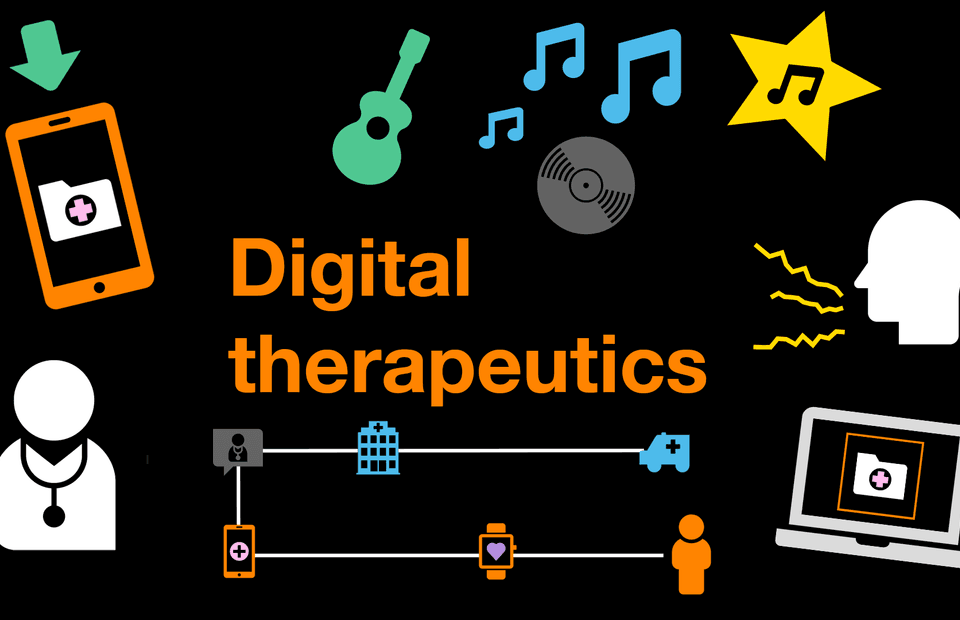
Digital therapy or DTx involves interaction with a medical device with a software element that is integrated into a care pathway. The device may or may not be prescribed by a healthcare provider, but it must meet two essential criteria: a safety criterion indicated by a CE marking in France and Europe or by an FDA marking in the US.
This patient safety criterion indicates that there is evidence in the form of data to show that the device has a positive clinical impact.
This patient safety criterion indicates that there is evidence in the form of data to show that the device has a positive clinical impact and its use is supported by scientific publications in peer-reviewed journals. For example, Poppins, develops pediatric applications for neurodevelopmental disorders for “dys” children. They use the app for a maximum of 20 minutes per day to play musical and rhythmic games and games to introduce language.
This application, for which there is safety and efficacy data, provides support in the home for patients in between speech therapy sessions, allowing them to continue their treatment. Speech therapy is still the main treatment and the only one reimbursed by insurers. The role of digital therapy is to provide additional support in care pathways.
People we quote
François Vonthron
A graduate of the École Polytechnique and UC Berkeley, François Vonthron is an expert in acoustics and was a founding member of HyVibe, a sound technology company incubated at Agoranov. He collaborated with French researchers and neuroscientists to build a multidisciplinary research project aimed at developing a rhythmic programme for children with specific learning difficulties. He has been co-founder and CEO of the start-up Poppins since 2018.