
Player provided by Orange Mastermedia. Starting it sends browsing data to that service.
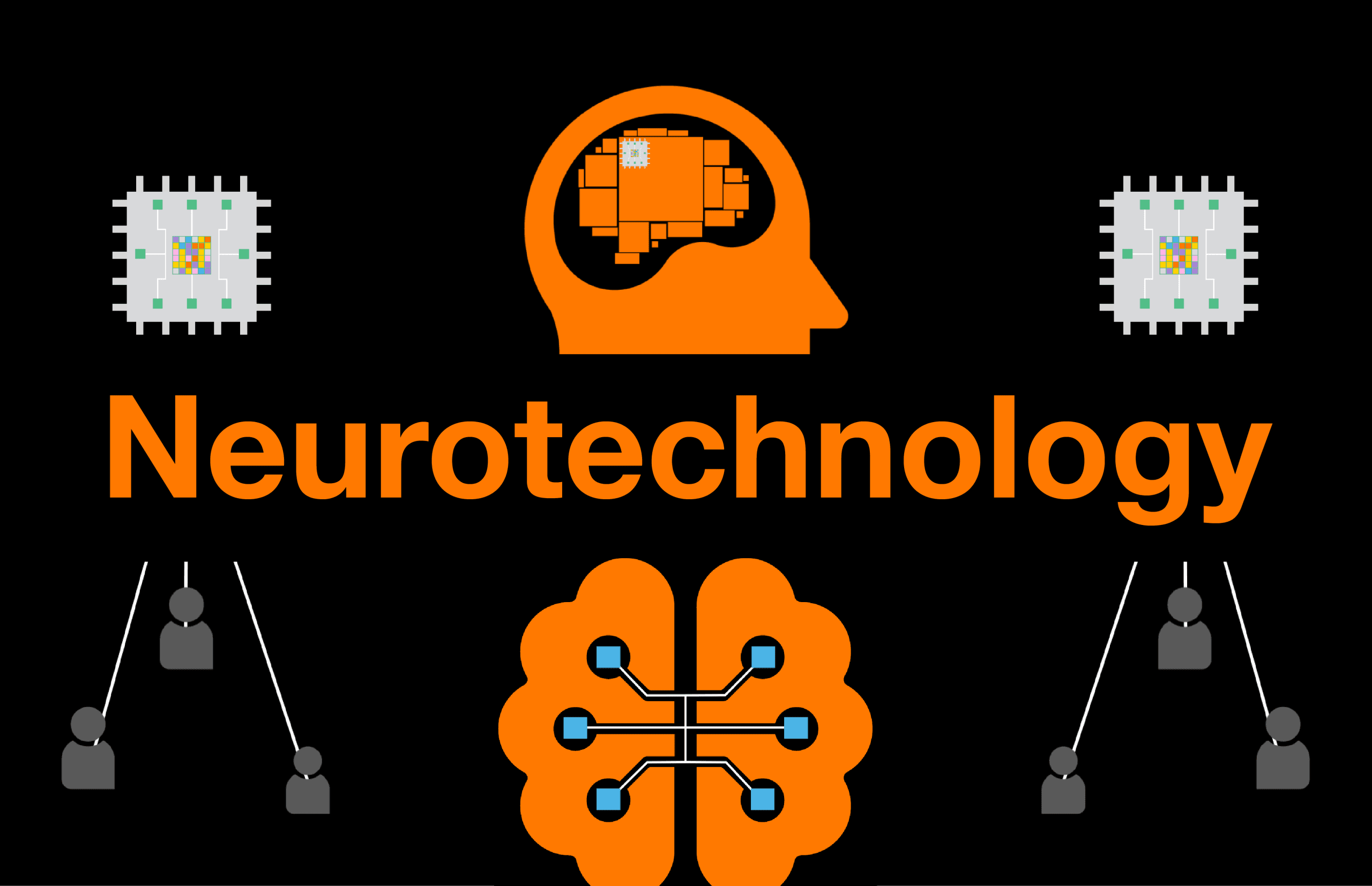
Global innovation at the nexus of computing and neuroscience has boosted the development of brain exploration techniques, brain-machine interfaces, and neurotechnologies. Increasingly miniaturized, and more and more efficient, they will enable us to better understand and anticipate challenges faced by our society and human health. These neurotechnologies may be invasive, requiring surgery to position implants at precise locations inside the brain, semi-invasive like the Neuralink implant which is placed on the brain’s surface, and non-invasive with devices like headsets placed on the user’s head.
However, there are concerns about these technologies being used to influence and manipulate people
Innovation in these fields is accelerating internationally in medical and non-medical and civil and military research. The hope is that they will lead to more efficient and faster treatments for pathologies like Parkinson’s disease, insomnia, depression, and ADHD. However, there are concerns about these technologies being used to influence and manipulate people.
Imagine that we are in 2035. A woman walking in the street is wearing a neurotech headset. She prepares to cross a junction in spite of a red light, convinced that she is not endangering anyone. The headset detects brain waves indicating her intention to cross the road and transmits them via Bluetooth to the police who fine her for jaywalking. This science-fiction scenario, which could be reality in the near future.
The first ethical issue concerns her mental privacy. The headset reveals her thoughts, which leads to her being punished. Thus our society is faced with the colossal challenge of detecting dilemmas like this, and determining desirable outcomes for future generations and humanity. It is not a matter of putting a brake on ideas and innovation, but of ensuring that they fully respect humanity and the common good.
People we quote
Laure Tabouy
A neuroscience and neuro-ethics researcher specialising in digital science, neurotechnology and artificial intelligence at the French Agence de la biomédecine and the CESP (Centre for Epidemiology and Population Health) of the University of Paris-Saclay, Laure Tabuoy holds doctorates in neuroscience, genetics and structural biology from the Université de Paris-Cité, and in ethics and neuro-ethics from the University of Paris-Saclay.