
Player provided by Orange Mastermedia. Starting it sends browsing data to that service.
The term “spatial computing” was coined to describe technological advances like augmented reality (AR), virtual reality (VR), and more generally, systems that understand and interact with 3D space. The term “spatial computing” first appeared in the 1990s in the USA and was later popularized from 2016 by Microsoft with its HoloLens glasses and by companies like Magic Leap and Xreal. This technology paved the way for hybrid real and virtual experiences but initially with many constraints like a field of vision of less than 50 degrees, high latency that affected the user experience, and a slow network as there was no 5G or fibre broadband at the time.
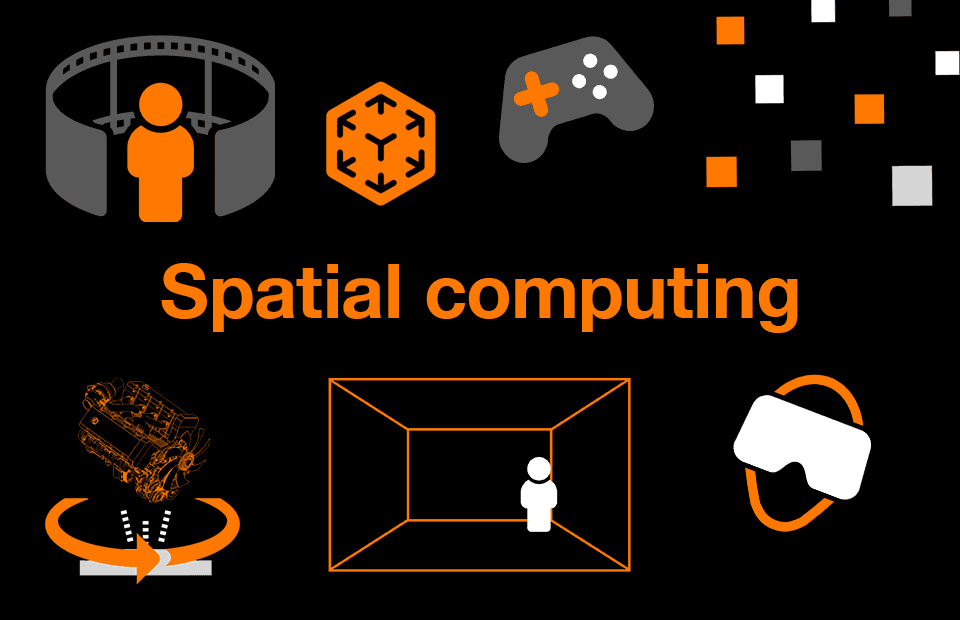
Engineers and technicians use holograms to visualize complex parts in 3D and collaborate remotely without losing touch with reality
The term “spatial computing” saw more non-academic use with the launch of Apple’s Vision Pro headset in February 2024. After eight years of development, eight years, Apple chose the term to highlight a new perspective on immersive experience and to differentiate itself from its rival Meta which favours terms like “virtual reality”, “mixed reality” and “metaverse”.
There are innovative use cases for spatial computing in several sectors. For example, in industries like automobiles and aerospace, engineers and technicians use holograms to visualize complex parts in 3D and collaborate remotely without losing touch with reality. In the retail real estate sector, customers can immersively visit properties without being physically present, which facilitates sales and purchasing. Finally, in the entertainment sector, users can watch films in a 180° immersive environment, play video games, and explore volumetric environments.
Spatial computing and mixed reality in general transform our interaction with physical and digital worlds. Whether they use devices by Apple, Meta, or Magic Leap, these technologies offer solutions to facilitate interaction and collaboration, for example, for B2B clients at Orange Business, and in the future, they may be offered to our retail customers, in the form of AR glasses coupled with a customized AI.
People we quote
Morgan Bouchet
He has been Director of Communications and CSR at Orange Grand Ouest since November 2024. He was previously marketing manager for ‘Immersive’ and ‘GenAI’ at Orange Group level.