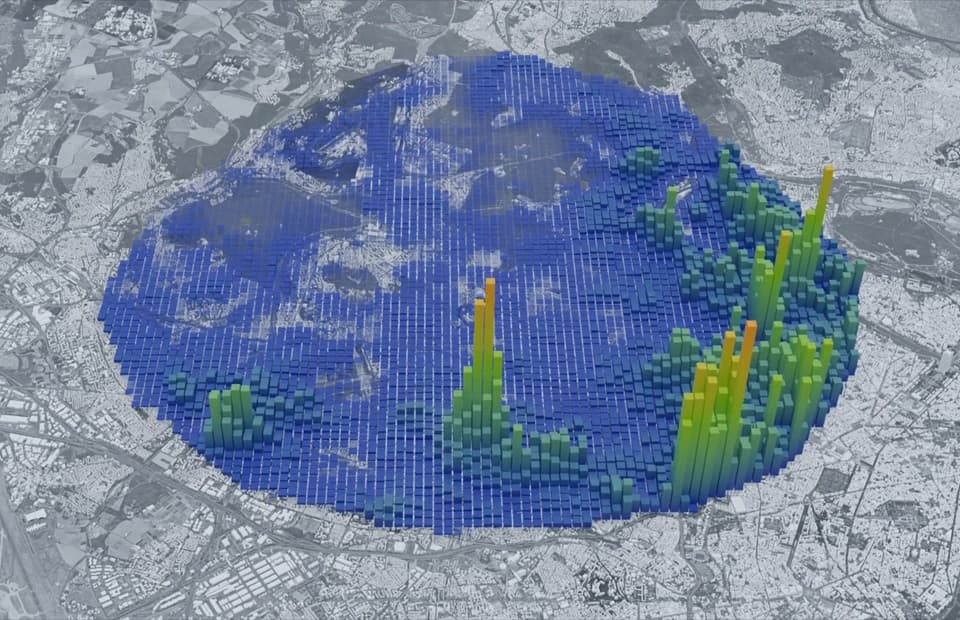
APIs are key connectors for making high-value features accessible to partners and customers. With the launch of network APIs, Orange is paving the way for future innovation.
Orange LiveNet aims to provide access to new, differentiating services, based on network APIs, for developers and businesses
Network APIs — springboards for innovation
In fact, network APIs underpin operators’ transition towards a platforming approach. In addition to their historical role as connectivity providers, they are now positioning themselves as facilitators of digital services. The aim is to design and make useful and practical APIs available to developer communities and businesses and give them access to previously inaccessible data and network functions, thus creating innovative solutions.
For Alexandru Cîinaru, Product and Business Development Manager – Network as a Service APIs at Orange LiveNet, this comes down to the fact that: “Our customers want to benefit from data and services linked to on-demand networks in real time. The platforming approach aims to meet this need, by enabling carriers to deliver solutions dynamically and instantaneously based on the cloud provider model. To this end, Orange has made two strategic moves in recent months. First, it became one of the founding members of the Aduna joint venture, alongside Ericsson and other global carriers. This initiative aims to provide a global aggregation platform of network APIs. In this case, the APIs in question are developed and standardised within the framework of the CAMARA open source project. The second key initiative was the creation of a new Business Unit, Orange LiveNet, which aims to provide access to new differentiating services, based on network APIs, for developers and businesses and provided among others via the developer.orange.com website.”
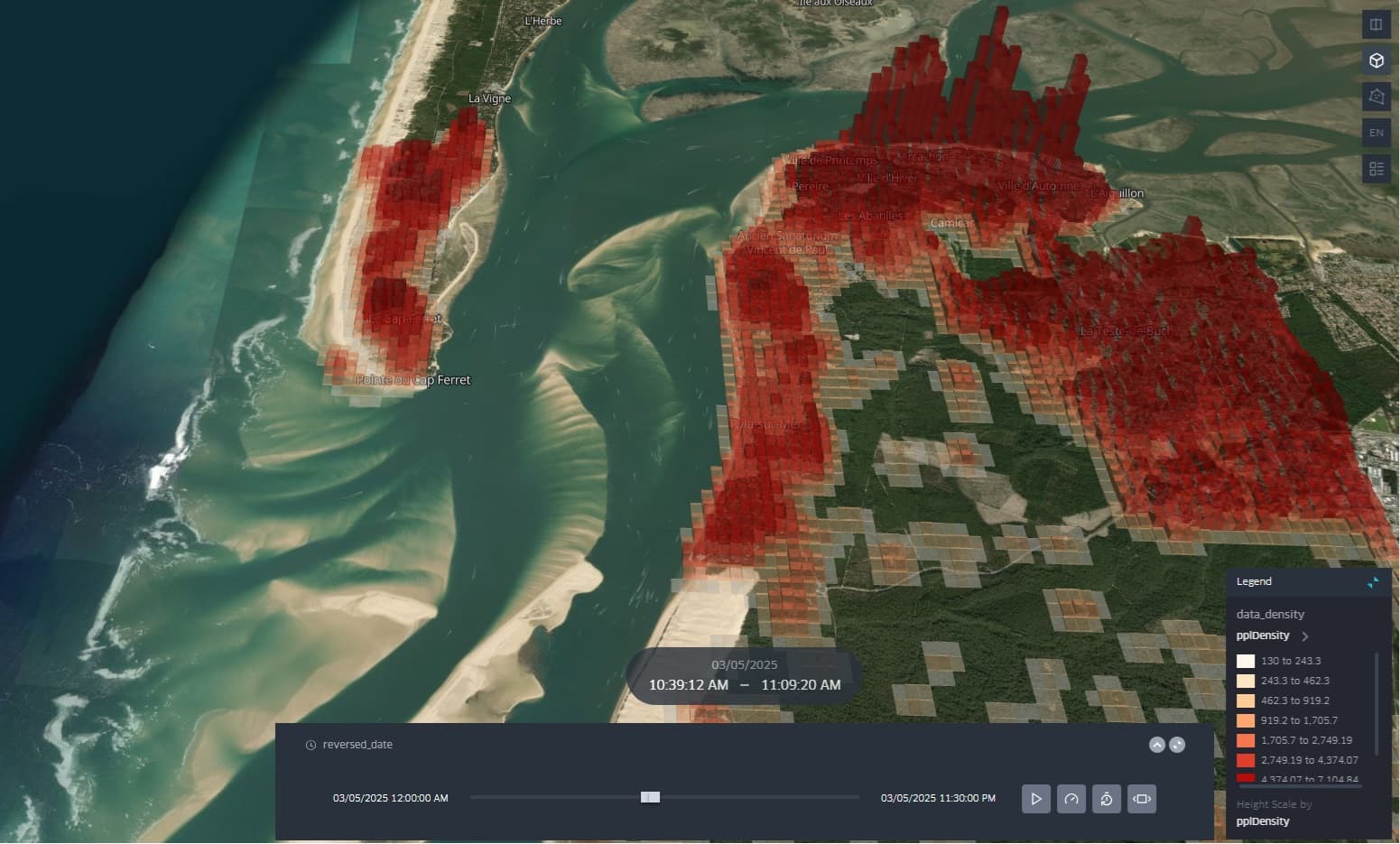
Population Density API example with Flux Vision
The Population Density Data API—a new addition to Orange Business’s Flux Vision service—is the perfect expression of this approach. “In the past decade, Flux Vision has established itself as a benchmark solution for analysing mobility flows and footfall, using data from Orange’s mobile networks”, explains Ronan Billon, Operations Manager at Flux Vision. “This meets many needs and use cases, which vary from one vertical to the next. In the tourism sector, for example, it can be used to measure how attractive an area is and where visitors are coming from and, in the retail sector, it can assess the effectiveness of commercial events compared to the competition. This product is constantly evolving. For example, it now includes indicators that report the carbon impact of the movement recorded, taking the mode of transport into account. Recently, Flux Vision has jumped on board with the process of opening up network APIs by incorporating the Population Density Data API from the CAMARA community, which provides a layer of predictive and dynamic information on population density.
A perfect example of how this API can be used is in the optimization of public transport by taking into account urban mobility flows in dense areas. An urban mobility player can thus access essential information drawn from network data aggregated by Flux Vision, in Network as a Service configuration Drone operators can access crucial information from the network data aggregated by Flux Vision, using the Network as a Service model In the future, they will be able to further refine this calculation with additional network data (such as indicators for radio resource congestion along the traffic corridor). This data, which meets the most stringent requirements in terms of confidentiality and anonymity, can cover large stretches of regions, with a refined geographical grid (150×150 m) and time slots of 30 minutes.
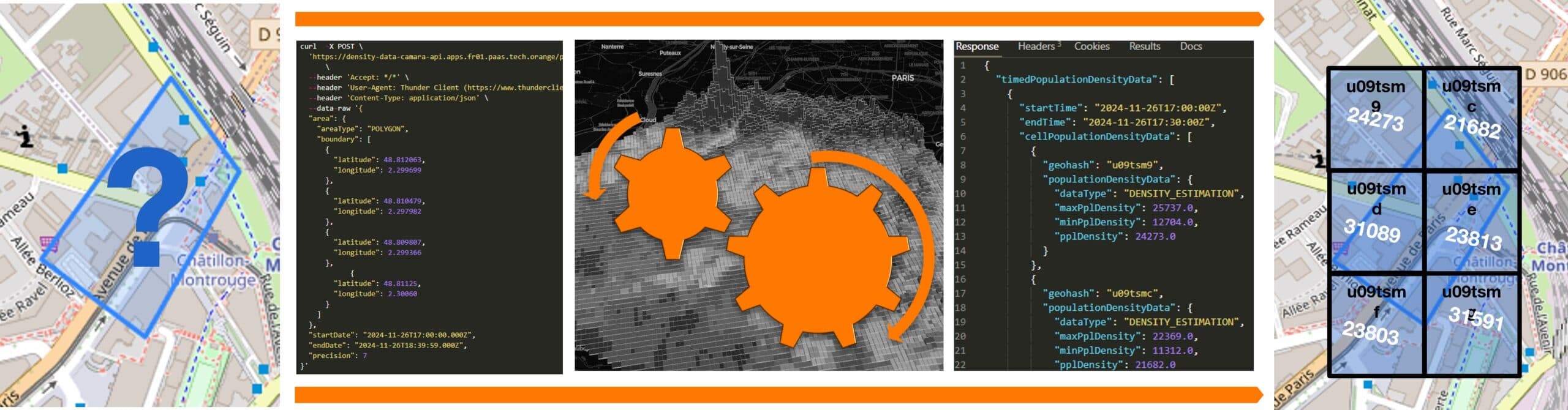
A fundamental first step before the scale-up
By integrating the Population Density Data API into Flux Vision (and making it accessible via Orange LiveNet on https://developer.orange.com), Orange has clearly demonstrated its commitment to providing high valued-added network APIs, among other initiatives. This project, presented at Orange OpenTech in 2024 and at VivaTech this year, is an early example of similar solutions to come, designed to enable developers and business to use networks as a service via APIs. These projects will—and have already started to—pave the way for innovative, personalized and value-creating services across a growing range of use cases.
People we quote
Alexandru Cîinaru
Product and Business Development Manager – Network as a Service APIs, Orange LiveNet. Alexandru is responsible for product innovation and business growth by bridging technical expertise and strategic business development in the Network API domain at Orange.
Ronan Billon
Operations Manager – Flux Vision, Orange Business. Ronan is responsible for ensuring product quality and delivery, as well as driving business development around the Flux Vision APIs at Orange Business. He leads data architecture and data science initiatives, managing a multidisciplinary team to improve the analysis of mobility and presence indicators for customers in France and internationally.